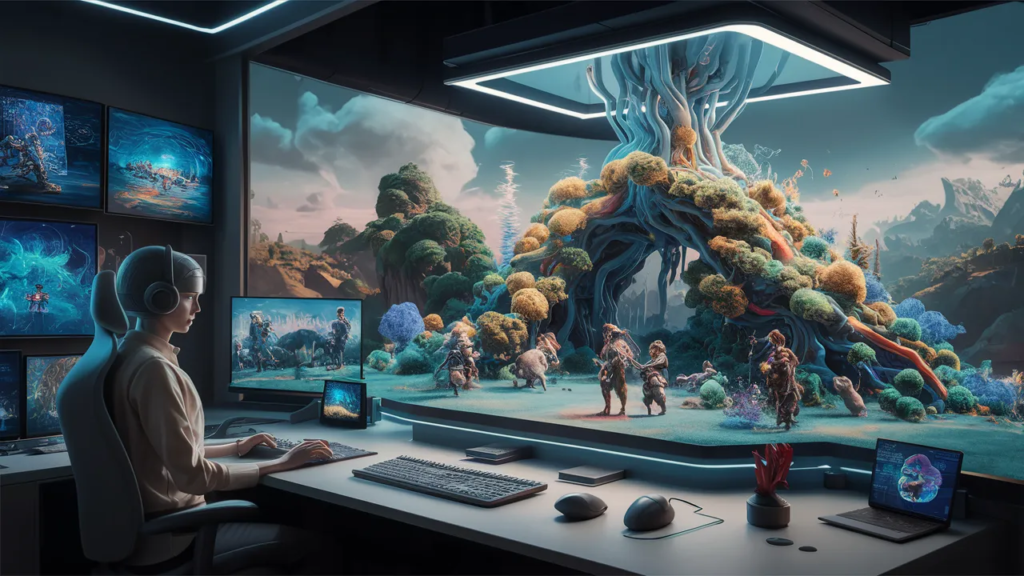
There’s a moment you’ll notice if you spend enough time around gaming cafés or college hostels — someone hunched over a phone, completely locked in, fingers moving like muscle memory. A few feet away, another player sits in front of a PC setup, headphones on, eyes glued to a larger screen. Two different worlds, same intensity.
Esports in India feels like it’s living in both these spaces at once. And the question isn’t just which one is better — it’s which one is growing faster, and why.
The Accessibility Factor
Let’s start with something obvious, but easy to overlook. Mobile gaming is everywhere. You don’t need a high-end setup, no expensive graphics card, no dedicated space. Just a decent smartphone and a stable internet connection — and you’re in.
Related storyWhy Game Subscription Services Haven’t Quite Taken Off in India—At Least Not Yet
That accessibility changes everything. In a country as vast and diverse as India, lowering the entry barrier means opening the door to millions of new players. Students, casual gamers, even people who never considered gaming before — they all get pulled in.
PC esports, on the other hand, demands a bit more commitment. Hardware costs, maintenance, upgrades — it’s a different kind of investment. Not impossible, but definitely less casual.
Community and Culture
There’s also a cultural shift happening. Mobile games have built communities that feel more… immediate. Friends playing together after college, local tournaments popping up, content creators streaming directly from their phones.
Related storyHow to Choose a Pool Table That Fits Your Rapid City, South Dakota Home
It feels organic, almost like how cricket spread through gullies before stadiums.
PC esports, though, still carries a certain prestige. It’s often associated with more competitive, technically demanding gameplay. Titles that require precision, strategy, and sometimes years of practice to master.
So while mobile brings people in, PC tends to hold onto those who want to go deeper.
Mobile esports vs PC esports: India me kaunsa segment zyada grow karega?
If you look purely at numbers, mobile esports currently has the upper hand — and by a significant margin. The player base is larger, the audience reach is wider, and the growth curve feels steeper.
But growth isn’t just about volume. It’s also about sustainability and depth.
Mobile esports is expanding rapidly because it’s easy to access and quick to scale. New games can gain popularity almost overnight. Tournaments attract huge participation because the barrier to entry is low.
Related storyWhen Worlds Build Themselves: The Quiet Rise of AI in Game Environments
PC esports, however, grows differently. Slower, yes, but often more stable. It builds structured ecosystems — professional teams, coaching systems, long-term sponsorships. The kind of foundation that supports a mature esports industry.
So the answer isn’t entirely straightforward. Mobile might dominate in reach, but PC holds its ground in competitive credibility.
Monetization and Opportunities
Here’s where things get interesting. Brands and sponsors are paying close attention to both segments, but for slightly different reasons.
Mobile esports offers scale. Massive audiences, high engagement, and a demographic that’s young and highly active online. It’s attractive for marketing, especially for brands targeting mass consumers.
PC esports, meanwhile, attracts a niche but dedicated audience. Viewers who are deeply invested, who follow teams, understand gameplay nuances, and stick around for longer sessions. That kind of engagement has its own value.
For players, both paths offer opportunities — just in different forms. Mobile esports might provide quicker entry points, while PC esports often leads to more structured career paths.
Infrastructure Still Plays a Role
India’s infrastructure still leans in favor of mobile. Internet speeds are improving, but consistency varies. Power supply, hardware availability — these factors can influence how easily someone can participate in PC gaming.
Mobile gaming sidesteps many of these issues. It’s portable, less dependent on fixed setups, and more adaptable to varying conditions.
That flexibility matters, especially outside major cities.
The Blurred Future
Interestingly, the line between mobile and PC esports isn’t as rigid as it once was. Cross-platform games, cloud gaming, and evolving technology are starting to blur boundaries.
You might start on mobile and transition to PC. Or stick with mobile but engage with content that feels just as competitive and immersive.
The ecosystem isn’t divided — it’s interconnected.
Final Thoughts
If you’re looking for a clear winner, you might be disappointed. Mobile esports is likely to continue leading in terms of sheer growth and accessibility. It’s fast, widespread, and deeply integrated into everyday life.
PC esports, though, isn’t going anywhere. It represents a different layer of the industry — one that values depth, structure, and long-term development.
And maybe that’s the real story. Not a competition between mobile and PC, but a coexistence. Two paths, shaping the future of esports in India in their own ways.
One driven by reach, the other by refinement.
And somewhere in between, millions of players figuring out where they belong.