Hard water is one of those household problems that tends to creep up on you. At first, you might notice a few white spots on your glasses or a chalky ring around the faucet. Then the showerhead starts collecting mineral deposits, soap doesn’t seem to lather properly, and cleaning the bathroom becomes an oddly regular battle.
The good news is that hard water can be managed. Modern treatment systems have become more efficient and easier to operate, giving homeowners several ways to reduce the everyday effects of excessive minerals in their water.
Understanding What Hard Water Really Means
Hard water contains dissolved minerals, primarily calcium and magnesium. These minerals occur naturally as water moves through soil and rock, and their concentration can vary significantly from one location to another.
Related storyHow to Stop Hard Water From Taking Over Your Home
Hard water isn’t necessarily something you can identify just by looking at a glass of water. It’s often the residue left behind that gives it away. You may notice scale around faucets, spots on dishes, stiff-feeling laundry, or buildup inside appliances that use heated water.
Before choosing treatment equipment, it’s smart to have your water tested. Knowing the actual hardness level can help you select a system that’s properly sized for your household.
How a Salt-Based Softener Works
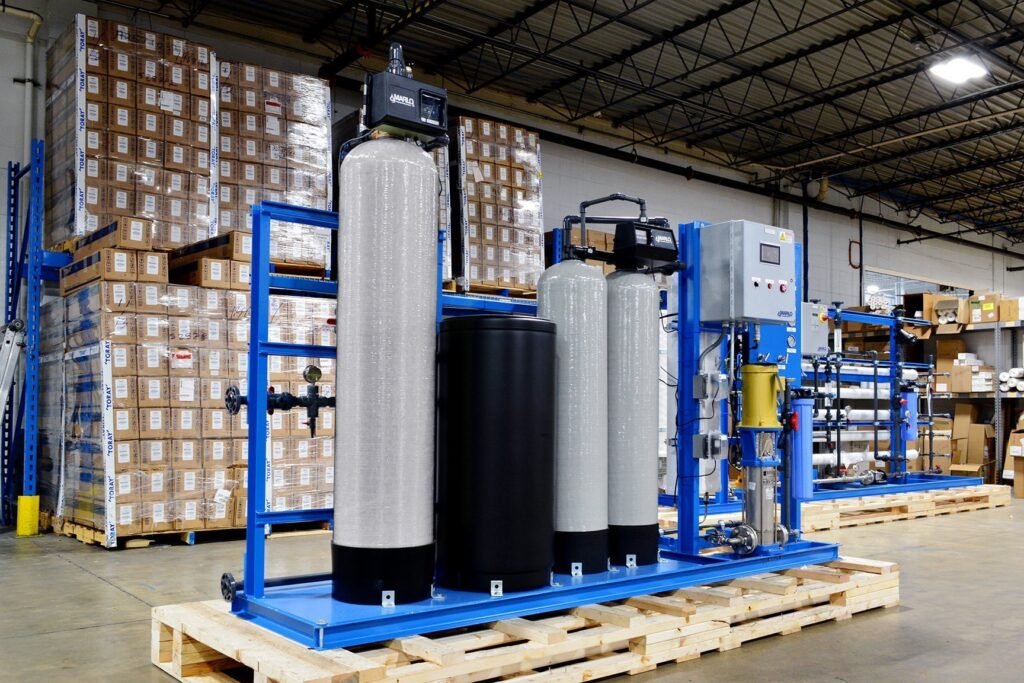
For homes with significant hardness, a Salt Based Water Softener is a common treatment option. Traditional softeners use an ion-exchange process to reduce calcium and magnesium from the water.
Inside the softener is a tank containing resin beads. As hard water passes through, the resin attracts calcium and magnesium ions. Over time, the resin becomes saturated and needs to be regenerated, typically using a salt solution.
Related storyUnderstanding Household Water Problems and Why the Right Solution Matters
It’s a fairly straightforward process, but modern systems have introduced better controls that can make the process more efficient.
What Vortech Technology Brings to the Table
One feature found in some modern softening systems is Vortech technology. The design is intended to improve how water moves through the mineral tank during operation and regeneration.
Better water distribution can help the system use its treatment media more effectively. It can also support more efficient regeneration by helping the incoming water and regeneration solution move through the tank more evenly.
The exact benefits depend on the system design, water conditions, and how the equipment is configured. So while technology like this can be useful, it should be considered alongside the overall construction and performance of the softener.
Related storyA Smarter Environmental Choice for Water Treatment Starts With Managing Hard Water
What Does It Mean When a Softener Removes Hardness?
It’s important to understand the specific job of a water softener. A properly functioning ion-exchange softener REMOVES hardness by exchanging calcium and magnesium ions for sodium or, in some systems, potassium ions.
This can reduce the mineral deposits that cause so many everyday frustrations.
You may see less scale around faucets and shower fixtures. Glassware can come out of the dishwasher with fewer spots, and soap may lather more easily. Over time, reducing hardness can also help limit scale accumulation in water heaters and other water-using appliances.
The improvement isn’t always dramatic on day one, but you’ll often notice it through the little things.
Why Proper Sizing Matters
A water softener shouldn’t simply be chosen because it’s the biggest model available. Oversizing can be inefficient, while an undersized system may need to regenerate more frequently than necessary.
Related storyUnderstanding Problem Water Systems: Practical Water Treatment Solutions for Everyday Water Problems
The right size depends on factors such as household water consumption, water hardness, and the system’s capacity.
A family of five with several bathrooms will naturally use more water than a single person living in a small apartment. That’s why a proper assessment is useful before installation.
Maintenance Is Part of the Process
Like any household equipment, a softener needs some attention. Salt-based systems require regular salt replenishment, and the equipment should be inspected according to the manufacturer’s recommendations.
Related storyHard Water Isn’t Just Annoying — It Slowly Wears a Home Down
It’s easy to forget about the softener because it usually operates automatically. But if the salt level drops too low or the system isn’t maintained correctly, performance can suffer.
A simple routine helps. Check the salt level periodically, keep the area around the equipment clean and dry, and pay attention to changes in water quality.
If the water suddenly starts feeling hard again, don’t ignore it. The system may need regeneration, maintenance, or professional inspection.
Soft Water Can Make Everyday Chores Easier
The benefits of treating hard water often show up in places homeowners don’t expect.
Cleaning can become easier because there may be less mineral residue on surfaces. Shampoo and soap can feel more effective. Laundry may feel different, and appliances can have less scale to deal with.
None of these changes are particularly glamorous, but that’s the point. Good water treatment improves ordinary routines.
You don’t install a softener because you want to think about water treatment every morning. You install one because you’d rather not spend your Saturday scrubbing mineral deposits from the shower door.
Choosing a System for the Long Term
When comparing water softeners, look beyond the initial price. Consider capacity, regeneration settings, water and salt efficiency, maintenance requirements, warranty coverage, and availability of replacement parts.
It’s also worth asking how the system handles changes in household water usage. Smart controls can be useful because they allow equipment to respond more closely to actual demand.
Don’t hesitate to ask questions, either. A reputable water-treatment professional should be able to explain the system in simple terms and show you why it’s appropriate for your water.
A Practical Solution to an Everyday Problem
Hard water may not be the most exciting home-improvement topic, but its effects can become surprisingly frustrating over time. From stubborn scale to appliance buildup, small problems can add up.
A properly selected and maintained water softener can help reduce those issues and make everyday water use more comfortable.
The key is not simply buying the most advanced system available. Test your water, understand the level of hardness, consider your household’s usage, and choose equipment designed around those needs.
When the system is properly sized and maintained, it can quietly do its job in the background—leaving you with fewer spots on the dishes, less scale around the fixtures, and one less household nuisance to worry about.