Table Of Contents
- Why Grab-And-Go Food Is Growing
- Start With Shopper Needs
- Choose The Right Service Style
- Plan Hot And Cold Food Zones
- Protect Food Safety From Prep To Sale
- Build A Focused Menu
- Improve Merchandising And Product Visibility
- Control Waste And Shrink
- Measure Program Performance
- Launch The Program In Clear Steps
- Common Questions
- Conclusion
Food retailers in Garland, Texas, have an opportunity to make busy meal decisions easier for commuters, families, students, and workers who need food without a long wait. A flexible grab-and-go program can turn a quick store visit into a practical stop for breakfast, lunch, a snack, or dinner. The right hot food display equipment can help retailers present prepared items clearly while supporting a service format that fits the store’s space and staffing plan.
Success is not simply about putting more prepared food near the entrance. Shoppers need products that look fresh, are easy to understand, are priced clearly, and can be picked up quickly. In North Texas, where hot weather can place extra pressure on food handling and holding routines, retailers also need dependable processes for temperature checks, replenishment, labeling, and cleaning.
Why Grab-And-Go Food Is Growing
Prepared food gives retailers a way to serve customers who want convenience but may not have time for a full restaurant meal. A grocery store can support a family picking up dinner, while a convenience-oriented location may focus on portable breakfast items, sandwiches, drinks, and snacks. The strongest programs make food easy to find and easy to buy without sacrificing quality.
Start With Shopper Needs
Begin with the store rather than the equipment catalog. Review traffic patterns by hour, identify the busiest dayparts, and look at what customers already buy together. A Garland store near offices may need fast lunch options, while a neighborhood market may find more demand for heat-and-eat family meals in the late afternoon. Basket data, staff observations, and short customer surveys can reveal which needs are currently unmet.
Related storyMore Than Just a Drink: Why Functional Beverages Are Finding Their Way Into Everyday Life
Choose The Right Service Style
There is no single display model that works for every retailer. Match the service approach to labor, product type, customer volume, and available floor space.
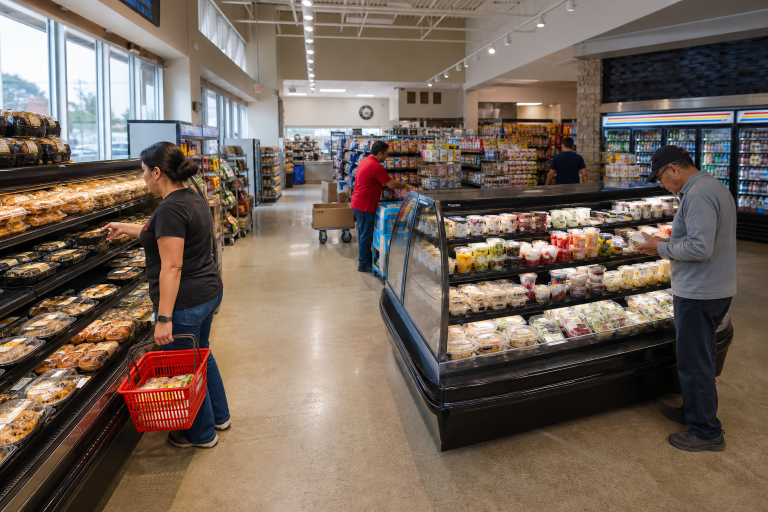
- Self-service works well for sealed salads, sandwiches, snack packs, bottled drinks, and packaged hot meals.
- Full service can suit portioned entrées, specialty foods, or products that need employee assistance.
- Hybrid service combines packaged options with staffed service during lunch or dinner peak periods.
- Preorder pickup can reduce waiting for customers who place orders before arriving.
Plan Hot And Cold Food Zones
A good layout lets customers see the offer quickly and lets employees restock it without creating congestion. Keep hot and cold sections distinct, leave room for shoppers to stop and compare products, and place utensils, sauces, napkins, and beverages near the foods they support. Products with the highest demand should sit where shoppers can comfortably see and reach them.
For example, a store can place breakfast sandwiches, coffee add-ons, fruit cups, and cold drinks close to the entrance in the morning. Later, that same area can shift its focus to packaged chicken, sides, salads, and meal bundles for customers heading home.
Related story10 Products on Amazon Every Dad Needs
Protect Food Safety From Prep To Sale
Food safety must be designed into the program before the first item reaches the display. The FDA Food Code provides a widely used framework for safe retail food practices, including time and temperature control, sanitation, date marking, and employee hygiene. Local and state requirements may differ, so Garland retailers should confirm the rules that apply to their operation.
- Create written procedures for receiving, preparing, holding, cooling, labeling, and discarding food.
- Assign regular temperature checks and document the results.
- Train employees to prevent cross-contamination and cross-contact with allergens.
- Use labels that identify products, ingredients when needed, allergens, preparation dates, and use-by dates.
- Keep service tools clean, available, and replaced when damaged or soiled.
Build A Focused Menu
A smaller, dependable menu is usually easier to execute than a large assortment with inconsistent quality. Start with items the store can produce, package, stock, and monitor well. Useful categories may include breakfast sandwiches, wraps, salads, soups, hot entrées, snack packs, and family meal components. Offer a range of price points, along with a few vegetarian, lighter, or protein-forward options where they fit local demand.
Improve Merchandising And Product Visibility
Customers should not have to search for basic details. Group foods by occasion, such as breakfast, lunch, dinner, or snack. Use clean, readable signs that show the name, price, and key dietary information. Face labels forward, restock in smaller batches when possible, and pair complementary products. Soup beside crackers or salads beside cold drinks can make the decision easier without making the display feel crowded.
Control Waste And Shrink
Waste control begins with production planning. Track sales by hour, not only by day, so the team can prepare less during slow periods and replenish more often when demand rises. Use first-in, first-out rotation; review items that repeatedly reach their discard time; and test smaller packages when volume is limited. Safe, approved markdown or donation procedures may also help with products that remain within their acceptable selling window.
Related storyMulti Sensory Tasting Experiences Beyond Flavor
Measure Program Performance
Retailers should measure more than total sales. Useful indicators include sales per square foot, units sold by hour, average transaction value, gross margin by item, markdowns, waste, restocking time, customer wait time, and repeat purchases. Test one change at a time, such as a new lunch bundle or a different display location, so results are easier to interpret.
Launch The Program In Clear Steps
- Review customer traffic, sales history, and current food gaps.
- Choose a limited first menu that matches operating skills.
- Map customer flow, employee access, cleaning areas, and restocking paths.
- Set procedures for food safety, labeling, rotation, and disposal.
- Train employees on product knowledge and daily routines.
- Run a limited pilot, measure sales and waste, then adjust carefully.
Common Questions
What Is A Grab-And-Go Food Program?
It is a retail setup that offers prepared meals, snacks, or drinks for quick purchase with little or no waiting.
Should A Store Offer Hot And Cold Food At The Same Time?
That depends on demand, labor, space, equipment, and the store’s ability to maintain food quality and safety in both zones.
Related storyCloud Kitchens in India Are Evolving Again — And This Time, It Feels More Grounded
What Is The Biggest Mistake To Avoid?
Adding too many products before the team has reliable routines for preparation, replenishment, temperature monitoring, labeling, and waste control.
Conclusion
A flexible grab-and-go program in Garland should be built around local customer routines, not assumptions. Start with a focused menu, a practical layout, clear food safety procedures, and measurements that show what is working. With a controlled pilot and steady improvements, retailers can create a prepared-food offer that supports convenience, protects quality, and fits the pace of everyday life in North Texas.