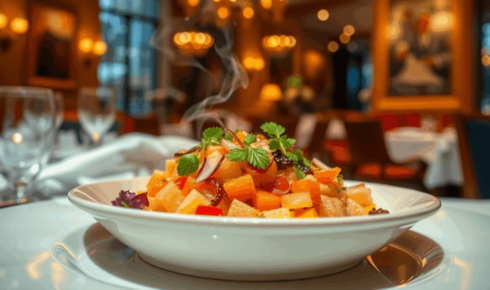
There’s something quietly satisfying about reading a menu that tells you where your food came from. Not just the country or region—but the actual farm, sometimes just a few kilometers away. It feels fresher, more intentional. Almost personal.
Over the last few years, this idea of hyperlocal sourcing has found its way into more restaurant kitchens, especially in urban India. Chefs are talking directly to farmers, menus are shifting with the seasons, and “locally sourced” isn’t just a buzzword anymore—it’s part of the brand story.
But beneath all that charm, there’s a more practical question lingering in the background.
Related storyCloud Kitchens in India Are Evolving Again — And This Time, It Feels More Grounded
What Hyperlocal Really Means (Beyond the Buzz)
Hyperlocal sourcing, in simple terms, is about getting ingredients from nearby farms or producers—often within a limited geographic radius. It cuts down on long supply chains and focuses on freshness, traceability, and community support.
Sounds ideal, right?
And in many ways, it is. Produce arrives fresher, flavors feel more vibrant, and there’s a sense of authenticity that customers seem to appreciate more than ever. Especially in a time when people are paying closer attention to what they eat.
But as with most things in the food business, the reality is layered.
The Cost Equation Isn’t Always Straightforward
At first glance, sourcing locally might seem like it should be cheaper. Fewer middlemen, shorter transport distances—it should reduce costs.
Related storyMulti Sensory Tasting Experiences Beyond Flavor
But that’s not always how it plays out.
Small-scale farmers often can’t match the pricing consistency of large distributors. Their yields fluctuate, supply can be unpredictable, and logistics—ironically—can sometimes become more complicated when dealing with multiple small vendors instead of one large supplier.
There’s also the time factor. Building relationships with local producers takes effort. It’s not a plug-and-play system.
The Big Question Restaurants Are Asking
Somewhere between the idealism and the operational challenges, restaurant owners find themselves wondering—Hyperlocal food sourcing restaurants ke liye profitable hai ya costly trend?
Related storyHow Garland, Texas Food Retailers Can Build Flexible Grab-And-Go Food Programs
And the honest answer? It depends.
For high-end or niche restaurants that can charge a premium, hyperlocal sourcing can actually enhance profitability. Customers are often willing to pay more for freshness, sustainability, and a compelling story behind their meal.
But for mid-range or budget-focused establishments, the math can get tricky. Margins are already tight, and inconsistent supply or higher ingredient costs can create pressure.
The Value Beyond the Plate
What’s interesting, though, is that profitability isn’t always measured in immediate numbers.
Related storyMore Than Just a Drink: Why Functional Beverages Are Finding Their Way Into Everyday Life
Hyperlocal sourcing can strengthen a restaurant’s brand identity. It creates a narrative—one that resonates with conscious consumers. People like knowing that their meal supports local farmers or reduces environmental impact.
That emotional connection? It has value. Sometimes more than a slight difference in cost.
Restaurants that lean into this story often build stronger customer loyalty. And in an industry where repeat business is everything, that counts for a lot.
Seasonal Menus: A Hidden Advantage
One unexpected benefit of hyperlocal sourcing is how it pushes restaurants toward seasonal menus.
Related storyCooking With Your Toddler in the Kitchen
Instead of trying to offer the same dishes year-round, chefs adapt based on what’s available. It keeps the menu dynamic, encourages creativity, and often leads to better-tasting food.
Of course, it also means letting go of some control. You can’t always get exactly what you want, when you want it.
But maybe that’s part of the appeal. It makes the dining experience feel less manufactured and more… real.
Operational Challenges That Can’t Be Ignored
Let’s not romanticize it too much, though.
Working with multiple small suppliers can be messy. Deliveries might not always be on time. Quality can vary. And scaling becomes difficult—what works for a 30-seat café might not work for a 200-cover restaurant.
There’s also the issue of consistency. Customers expect a certain standard every time they visit. Balancing that expectation with the variability of local produce isn’t easy.
It requires flexibility—not just from the kitchen, but from the entire business model.
Technology Is Starting to Bridge the Gap
Interestingly, technology is beginning to make hyperlocal sourcing more manageable.
Platforms that connect farmers directly with restaurants are emerging, helping streamline orders and logistics. Some even provide real-time updates on availability, making planning a bit less uncertain.
It’s still evolving, but it shows promise. If these systems become more reliable, they could reduce some of the friction that currently holds restaurants back.
So, Is It Worth It?
That’s the question every restaurateur eventually circles back to.
If your brand is built around quality, sustainability, and storytelling, hyperlocal sourcing can be a powerful asset. It aligns with your identity and enhances the overall experience you offer.
If your focus is on volume, consistency, and tight margins, it might feel like a luxury rather than a necessity.
But here’s the thing—this doesn’t have to be an all-or-nothing decision.
Many restaurants are finding a middle ground. Sourcing certain key ingredients locally while relying on traditional supply chains for others. It’s not as pure, perhaps, but it’s practical.
A Shift That Reflects Changing Priorities
At its core, the rise of hyperlocal sourcing says something about how dining itself is evolving.
People aren’t just eating for convenience anymore. They’re looking for connection—for food that feels thoughtful, not just prepared.
And restaurants, in their own way, are trying to meet that expectation.
Final Thoughts
Hyperlocal food sourcing isn’t a magic solution. It won’t automatically boost profits or simplify operations. But it offers something else—something a bit harder to quantify.
A sense of place. A story. A connection between the plate and the land it came from.
For some restaurants, that’s enough to justify the effort. For others, it’s a balancing act.
Either way, it’s clear that this isn’t just a passing trend. It’s part of a broader shift in how we think about food—and that, more than anything, makes it worth paying attention to.