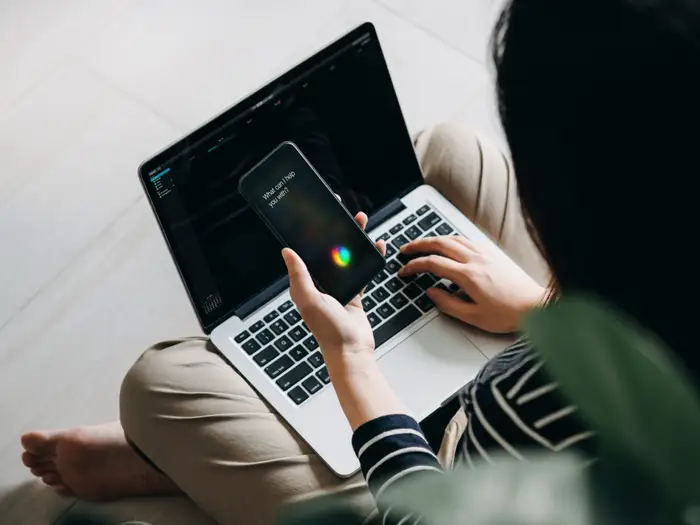
There’s a strange kind of comfort in knowing your phone understands you. Not in a sci-fi, all-knowing way—but in small, practical moments. When it suggests a reply that actually sounds like you, or reminds you of something you almost forgot. These little interactions are easy to overlook, but they hint at something bigger quietly unfolding.
We’ve spent years relying on cloud-based intelligence—sending our data somewhere far away, waiting a fraction of a second, and getting something useful back. It works, mostly. But now, there’s a noticeable shift. AI is moving closer to us. Not metaphorically—literally onto our devices.
The Rise of On-Device Intelligence
For a long time, powerful AI models needed massive servers. That meant everything—from voice assistants to recommendations—had to be processed in the cloud. It was efficient, scalable, and, well, necessary.
Related storyA Mirror in the Machine: How Digital Twins Are Quietly Changing Real-World Work
But things are changing. Chips are getting faster. Devices are becoming more capable. Suddenly, your smartphone or laptop isn’t just a screen—it’s a mini AI engine.
And this changes the experience in subtle but meaningful ways. Responses become faster. No internet? No problem. More importantly, your data doesn’t always have to leave your device.
That last part feels small until you really think about it.
Privacy Isn’t Just a Feature Anymore
There’s been a growing awareness around data privacy, especially in recent years. People are asking questions they didn’t ask before—where is my data going? Who has access to it?
Related storyGetting Found in AI-Powered Search: A Real-World Look at AI Visibility Optimization
On-device AI offers a different answer. If processing happens locally, your personal data stays… personal. Your conversations, habits, preferences—they don’t need to be constantly uploaded and analyzed somewhere else.
It’s not a perfect solution, of course. But it’s a step toward giving users a bit more control. And in today’s digital environment, that’s becoming increasingly valuable.
Speed, Context, and Personalization
Another interesting thing about personal AI assistants is how well they can understand context. Because they’re embedded within your device, they have access to patterns—how you type, what apps you use, even when you’re most active.
Related storyWhen “Free” Doesn’t Feel Free Anymore: Why Privacy-First Apps Are Getting Attention
This doesn’t necessarily make them smarter in a universal sense, but it makes them more relevant to you.
And then there’s speed. Without the need to ping a server, responses can feel almost instant. It’s the kind of smooth experience you don’t notice when it works—but definitely notice when it doesn’t.
But Cloud AI Isn’t Going Anywhere
It’s tempting to think on-device AI will replace cloud AI entirely, but that’s probably not how things will play out.
Cloud systems still have advantages—massive computational power, access to broader datasets, and the ability to continuously improve models at scale. For complex tasks, they’re hard to beat.
So instead of replacement, what we’re likely seeing is a division of roles. Personal, real-time, sensitive tasks handled locally. Heavier, more complex processing handled in the cloud.
A kind of quiet collaboration between the two.
The Question Everyone Is Starting to Ask
As this shift becomes more visible, one question naturally comes up: Personal AI assistants (on-device AI) ka future cloud AI se kaise different hoga?
The difference lies in how—and where—intelligence is applied. On-device AI focuses on immediacy, privacy, and personalization. Cloud AI, on the other hand, leans into scale, complexity, and collective learning.
It’s not about which one is better. It’s about which one fits the moment.
Think of it like this—your personal assistant versus a large research team. Both are useful, just in different ways.
Real-World Examples Are Already Here
If you look around, you’ll see early versions of this shift everywhere. Smartphones using AI for photography enhancements without sending images to the cloud. Voice assistants that can process basic commands offline. Even keyboards that learn your typing style over time.
These are small steps, but they add up.
And as hardware continues to improve, these capabilities will only expand. More tasks will move on-device. More intelligence will feel… local.
A Subtle Change in How We Interact With Tech
There’s something almost personal about having AI live on your device. It’s not just a tool you access—it becomes part of your everyday flow.
You don’t think about “using AI.” You just use your device, and it quietly adapts to you.
That shift—from external tool to integrated experience—might be the most significant change of all.
Looking Ahead Without Overhyping It
It’s easy to get carried away with predictions, but the reality is usually more gradual. On-device AI won’t suddenly take over everything. There will be limitations, trade-offs, and plenty of iterations along the way.
But the direction feels clear.
We’re moving toward a world where AI isn’t just something you connect to—it’s something you carry with you. Something that understands your context a little better, respects your boundaries a bit more, and responds just a touch faster.
And maybe that’s enough. Not revolutionary in a loud, dramatic sense—but quietly transformative in the way it fits into everyday life.