Water is part of nearly everything we do at home. We use it to make morning coffee, wash vegetables, take showers, clean floors, and run appliances that rarely get much attention until something goes wrong. So when water starts leaving spots on glassware, developing an unusual smell, or making laundry feel less fresh, it’s natural to wonder whether there’s a better way to manage it.
For some households, a simple filter on the kitchen tap may be enough. Others have water-quality concerns throughout the property, from mineral deposits in the bathroom to sediment affecting plumbing fixtures. In these situations, treating water at a single tap may not address the bigger picture.
That’s where a whole-home filtration system can be useful. Rather than treating water at just one point, it filters the supply as it enters the house, helping address selected water-quality issues across multiple rooms. Whether it’s the right choice, however, depends on what’s in your water, what you want to improve, and how much maintenance you’re comfortable handling.
Related storyA Smarter Environmental Choice for Water Treatment Starts With Managing Hard Water
What Is Whole-Home Water Filtration?
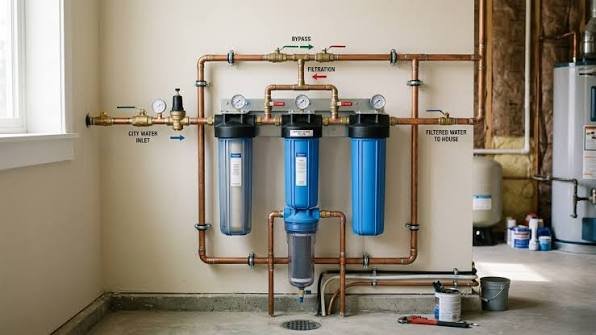
A whole-home filtration system, sometimes called a point-of-entry system, is typically installed where the main water line enters the property. Water passes through the treatment equipment before reaching showers, bathroom sinks, kitchen taps, washing machines, and other connected fixtures.
Unlike a small filter attached to a single faucet, whole-home filtration can treat water used throughout the house. Depending on the equipment, it may reduce sediment, chlorine, unpleasant odours, or other specific substances identified through water testing.
The important word here is specific. Not every filtration system removes the same contaminants. A sediment filter catches suspended particles, while activated carbon can reduce chlorine and certain compounds that affect taste and smell. Other contaminants may require different technologies altogether.
A whole-home system also isn’t automatically a water softener. Filtration and softening serve different purposes, although they can be installed together when the water has multiple issues. Understanding that distinction can prevent a common mistake: buying one large system and expecting it to solve every water problem at once.
Related storyBetter Water for the Long Run: Why Testing, Support, and Maintenance Matter
How Can Better Water Change Everyday Life?
Water quality often becomes noticeable through small, ordinary frustrations. Perhaps shower doors develop cloudy marks shortly after cleaning, or freshly washed glasses come out of the dishwasher covered in spots. Maybe the water has a chlorine-like smell that makes filling a drinking glass less appealing.
The benefits of treatment depend on the cause. If chlorine is responsible for an unpleasant taste or odour, an appropriately selected carbon filter may improve the experience. If sediment is entering the plumbing, suitable filtration can capture particles before they travel through the house.
For homeowners dealing with these concerns, better water can mean fewer annoying deposits, a more pleasant shower, or less time spent cleaning certain fixtures. Those improvements may seem small individually, but they can make daily routines feel easier.
It’s worth keeping expectations realistic, though. Filtration doesn’t automatically make water softer, eliminate every contaminant, or guarantee that drinking water is microbiologically safe. The right equipment can improve specific aspects of water quality, but the results depend on the source water and the technology being used.
Related storyUnderstanding Problem Water Systems: Practical Water Treatment Solutions for Everyday Water Problems
Understanding What’s in Your Water First
Before shopping for a system, find out what needs to be removed. This sounds obvious, yet many homeowners start by comparing product features or choosing the unit with the longest list of advertised benefits.
If your home receives municipal water, check the local water-quality report and consider testing when you notice unusual changes or have concerns about plumbing-related contaminants. Older household plumbing, for example, can introduce problems that aren’t necessarily addressed by a standard whole-home filter.
Private well owners need to take a more active role because they generally don’t receive the same routine monitoring provided by municipal water utilities. Testing should reflect local groundwater risks and may include bacteria, nitrates, pH, hardness, iron, manganese, and other relevant substances.
Related storyChoosing the Right Water Treatment Installation Approach for Cleaner, Healthier Water at Home
A water test provides a starting point for choosing the right technology. It can also reveal when a filtration system isn’t the appropriate first step. If testing identifies a structural problem with a well or a serious contamination issue, the underlying cause may need to be corrected before equipment is installed.
Choosing a System That Fits Your Household
The right filtration system should suit the water supply, the number of people living in the home, and the amount of water used at busy times. A unit that’s too small may struggle when several showers, taps, or appliances run together.
Filter capacity and flow rate deserve particular attention. A system should provide enough water for normal household use without creating an unnecessary drop in pressure. The size of the plumbing connections, available installation space, and access for maintenance also matter.
Related storyHow Modern Water Softeners Make Hard Water Easier to Manage
Consider the type of filter media as well. Sediment filters are useful for suspended particles, while activated carbon is commonly used to reduce chlorine and certain taste- and odour-causing compounds. Specialized media may be needed for particular contaminants, and some water supplies require several treatment stages.
If your main concern is hard water, a water softener may be more appropriate than a standard filtration unit. Hardness comes mainly from dissolved calcium and magnesium, which can create scale on fixtures and heating elements. A typical sediment or carbon filter won’t remove these minerals in the same way a properly selected softener can.
Ask installers to explain what the recommended system removes, what it leaves behind, and what evidence supports its performance. Product certifications and independently verified reduction claims can help you compare options more confidently.
Why Treating Water Throughout the House Matters
One advantage of a whole-home system is that it can address selected issues before water reaches different parts of the plumbing network. This can be particularly helpful when the concern isn’t limited to drinking water from the kitchen.
For example, sediment entering through the main supply can affect multiple faucets and appliances. A properly sized sediment filter installed at the point of entry can capture those particles before they spread through the household plumbing.
Likewise, a system designed to reduce chlorine may improve the water supplied to showers and bathroom taps, although the degree of improvement depends on the filter and the water conditions.
Treating every faucet doesn’t mean every drop of water will be free from every possible contaminant. It means the water passes through the chosen treatment stage before being distributed around the house. A separate drinking-water filter may still be useful if you want additional treatment at the kitchen sink or need technology specifically designed for a contaminant identified in testing.
Maintenance Is Part of the Investment
A filtration system isn’t something you can install and forget about indefinitely. Filter cartridges eventually become loaded with captured material, while treatment media may need replacement, cleaning, or backwashing according to the manufacturer’s instructions.
Maintenance schedules vary. Some filters need attention more frequently when the incoming water contains substantial sediment. Others have longer service intervals but require specific checks to remain effective.
Before making a purchase, ask about replacement-filter costs, service availability, expected maintenance frequency, and any additional water or electricity requirements. A system with a lower initial price may cost more over time if its filters need frequent replacement.
It’s also wise to keep records of installation dates and service visits. If water quality changes or the system begins performing poorly, those records can help identify what needs attention.
Making a Practical Decision for Your Home
Whole-home filtration can be a worthwhile investment when water-quality concerns affect several areas of a property. It offers a central treatment point and can make ongoing water management more convenient. But it isn’t necessary for every household, and a smaller point-of-use filter may be enough when the only concern is drinking-water taste.
Start with the problem rather than the product. Test the water where appropriate, identify the contaminants or characteristics you want to address, and compare systems based on verified performance, household demand, and maintenance costs.
Good water treatment isn’t about buying the biggest unit or chasing every advertised feature. It’s about choosing a sensible solution that fits your home and continues to work over time. With accurate information and realistic expectations, you can make a confident decision and enjoy the everyday benefits of water that better suits your household’s needs.