In a busy business, water is rarely the thing people talk about first. Owners think about staff, customers, orders, equipment, cleaning, schedules, energy bills, and about a hundred other moving parts. Water just runs in the background — until it starts causing problems.
Maybe dishes come out spotted in a restaurant. Maybe laundry feels rough in a hotel. Maybe a boiler needs service too often, or ice tastes odd, or fixtures keep building up scale no matter how often they are cleaned. These issues may seem small at first, but in a commercial setting, small water problems can become expensive pretty quickly.
That is why business water softener installation can be more than a comfort upgrade. For many businesses, it is a practical decision that helps reduce scale, improve daily operations, and support equipment that depends on consistent water quality.
Hard Water Is Not Just a Home Problem
Hard water contains minerals like calcium and magnesium. In a house, that may mean spots on glasses, dry skin, and scale around faucets. In a business, the same problem can affect far more than appearance.
Related storyWhy Reliable Water Systems Are Becoming a Smart Investment for Modern Businesses
Restaurants, laundromats, salons, hotels, car washes, offices, healthcare facilities, manufacturing spaces, and commercial kitchens all use water in different ways. When hard water moves through heaters, dish machines, coffee equipment, steamers, boilers, pipes, and fixtures, it can leave scale behind. That scale builds slowly, but it does not stay harmless forever.
Equipment may work harder. Energy use may rise. Cleaning may take longer. Soap and detergents may not perform as well. Customers may notice spots, odors, dull laundry, or poor-tasting water before anyone on staff realizes the source.
Why Testing Comes Before Treatment
Every business has different water demands. A small office does not use water like a restaurant. A laundromat has different needs than a dental clinic. A hotel may need high flow, consistent pressure, and treatment that can handle peak demand. That is why guessing usually leads to poor results.
Related storyUnderstanding Problem Water Systems: Practical Water Treatment Solutions for Everyday Water Problems
A proper water test can check hardness, pH, iron, chlorine, total dissolved solids, sediment, and other common concerns. For some businesses, more advanced testing may be needed depending on the industry, equipment, and water source.
This is where commercial water treatment becomes a tailored process rather than a one-size-fits-all purchase. The right system depends on water chemistry, daily usage, flow rate, plumbing layout, equipment sensitivity, and maintenance expectations.
A good plan starts with facts. Once the water is understood, the treatment system can be sized and designed correctly.
Protecting Equipment Is Protecting Profit
Commercial equipment is expensive. Water heaters, boilers, dishwashers, ice machines, espresso machines, steam tables, laundry machines, cooling systems, and industrial equipment all depend on water quality more than many people realize.
Related storyWhy Water Purity Matters More in Commercial and Specialized Applications
When minerals, sediment, or other water problems are ignored, they can shorten equipment life and increase downtime. Scale can reduce heat transfer. Clogged valves can slow production. Poor water quality can affect taste, cleaning results, and customer experience.
One of the smartest reasons to treat water is to protect equipment before problems become urgent. Preventive treatment often costs less than emergency repairs, replacement parts, or lost business time. It is not always flashy, but it is practical.
Better Water Can Improve Daily Operations
In commercial spaces, water affects workflow. In a restaurant, it affects dishwashing, ice, beverages, steamers, coffee, and cleaning. In a hotel, it affects laundry, guest showers, fixtures, and housekeeping. In a salon, it affects rinsing, hair feel, and customer comfort. In a laundromat, water quality directly affects wash results and machine performance.
Softened or properly treated water can help detergents work better, reduce spotting, minimize scale, and improve overall consistency. Staff may spend less time fighting stains, buildup, or repeated cleaning problems. Customers may not know the water was treated, but they often notice the results.
Related storyChoosing the Right Water Treatment Installation Approach for Cleaner, Healthier Water at Home
Clearer glasses, fresher laundry, better-tasting beverages, and cleaner-looking fixtures all help support the business’s image.
Choosing the Right System Size Matters
Commercial water systems must be sized correctly. A residential-style unit may not keep up with business demand. If the system is too small, it may run out of capacity, reduce pressure, regenerate too often, or fail to deliver consistent results during busy periods.
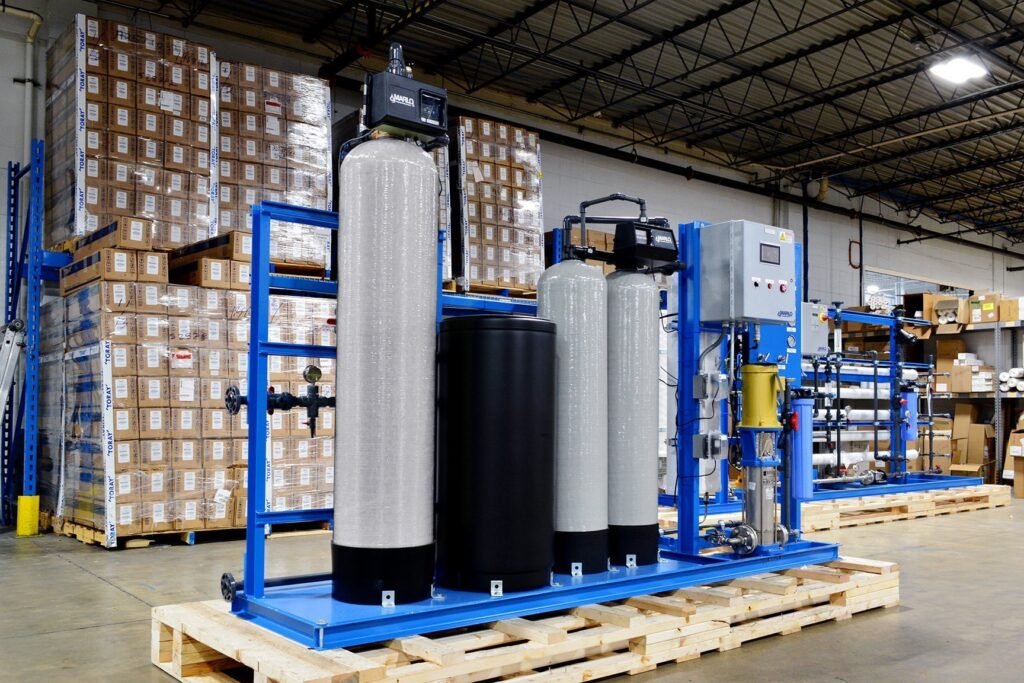
The design should consider peak water usage, number of fixtures, equipment requirements, flow rate, hardness level, and daily operating hours. Some businesses need continuous soft water with twin-tank systems. Others may need pre-filtration, carbon filtration, reverse osmosis, or specialty treatment for iron, sediment, odor, or dissolved solids.
Related storyA Smarter Environmental Choice for Water Treatment Starts With Managing Hard Water
A properly sized system does not just work better. It is easier to maintain and more dependable during high-use periods.
Different Industries Have Different Water Needs
There is no universal commercial water solution. A café may care most about taste and espresso machine protection. A commercial laundry may need softened water for better detergent performance. A medical or dental office may need specific water standards for equipment. A car wash may need spot-free rinse quality. A manufacturing facility may need consistent water for processes or machinery.
This is why industry experience matters. The person designing the system should understand not only the water test, but also how the business uses water throughout the day.
Good water treatment should fit the operation, not interrupt it.
Maintenance Should Be Planned, Not Forgotten
Even the best system needs care. Salt levels must be checked in softeners. Filters need replacement. Reverse osmosis membranes need service. Carbon media eventually becomes exhausted. Valves, settings, and flow rates may need periodic review.
For businesses, maintenance should be predictable. A neglected system can lead to inconsistent water, equipment strain, and surprise repair costs. A clear service schedule helps avoid that.
It also helps staff know what to watch for. If water pressure drops, scale returns, or filters clog too quickly, those are signs the system needs attention.
The Quiet Value of Reliable Water
Water treatment does not usually get applause. Customers rarely say, “Wow, your water system is excellent.” But they notice clean dishes, soft towels, good coffee, clear ice, spotless fixtures, and equipment that works without constant interruption.
That is the quiet value of better water in a business. It supports the things people do notice.
For owners and managers, the benefit is peace of mind. Fewer water-related headaches. Less scale. Better performance from equipment. More consistent results for staff and customers.
In the end, commercial water treatment is not about adding complexity. It is about removing friction from everyday operations. When the right system is tested, designed, installed, and maintained properly, water becomes what it should be — dependable, efficient, and quietly working in the background while the business moves forward.