There’s something quietly frustrating about hard water. You turn on the shower and notice white spots on the glass. The kitchen faucet develops a chalky ring. Maybe the laundry feels a little rougher than it used to, even after using plenty of detergent. None of these problems seem dramatic on their own, but together, they can become a real nuisance.
The issue usually comes down to minerals naturally present in groundwater, especially calcium and magnesium. These minerals aren’t necessarily dangerous, but they can affect plumbing, appliances, cleaning, and the overall feel of water around the house. Understanding what hard water does—and choosing the right solution—can save homeowners a surprising amount of time and money.
What Hard Water Really Means
Hard water is water containing elevated levels of dissolved calcium and magnesium. As water moves through soil and rock, it can pick up these minerals before reaching a private well or municipal supply.
Related storyUnderstanding Household Water Problems and Why the Right Solution Matters
The trouble often starts when that mineral-rich water is heated or allowed to evaporate. Minerals can be left behind as deposits on fixtures, showerheads, water heaters, and pipes. Over time, those deposits may become difficult to remove.
This is where hard water & scale buildup become especially frustrating. A small amount of residue might simply look unattractive, but repeated accumulation can interfere with water flow and reduce the efficiency of appliances that heat water.
Hardness levels vary considerably from one location to another, so assuming that every home has the same water quality isn’t a great idea. Testing the water first gives homeowners a much clearer picture of what they’re actually dealing with.
How Hard Water Affects Everyday Life
You don’t need to be a plumber to notice the signs.
Related storyA Smarter Environmental Choice for Water Treatment Starts With Managing Hard Water
Soap and shampoo may not rinse as easily because hard water reacts with soap, leaving behind a film. Skin can feel dry or tight after bathing, while hair may seem dull or less manageable. Glassware can come out of the dishwasher with cloudy marks, and freshly washed clothes may feel less soft than expected.
Then there’s the plumbing.
Mineral deposits can collect inside pipes and fixtures, particularly in systems that regularly handle heated water. Showerheads may spray unevenly because their small openings become restricted. Faucets can develop stubborn deposits around aerators and joints.
The water heater deserves particular attention. Heating hard water encourages mineral precipitation, which can create sediment and scale inside the tank or on heating components. That buildup may reduce efficiency and, in some cases, contribute to premature equipment problems.
Related storyHow Modern Water Softeners Make Hard Water Easier to Manage
None of this means a hard-water home is doomed. It simply means the water deserves a little attention before a minor annoyance turns into an expensive repair.
Why Water Softeners Are So Popular
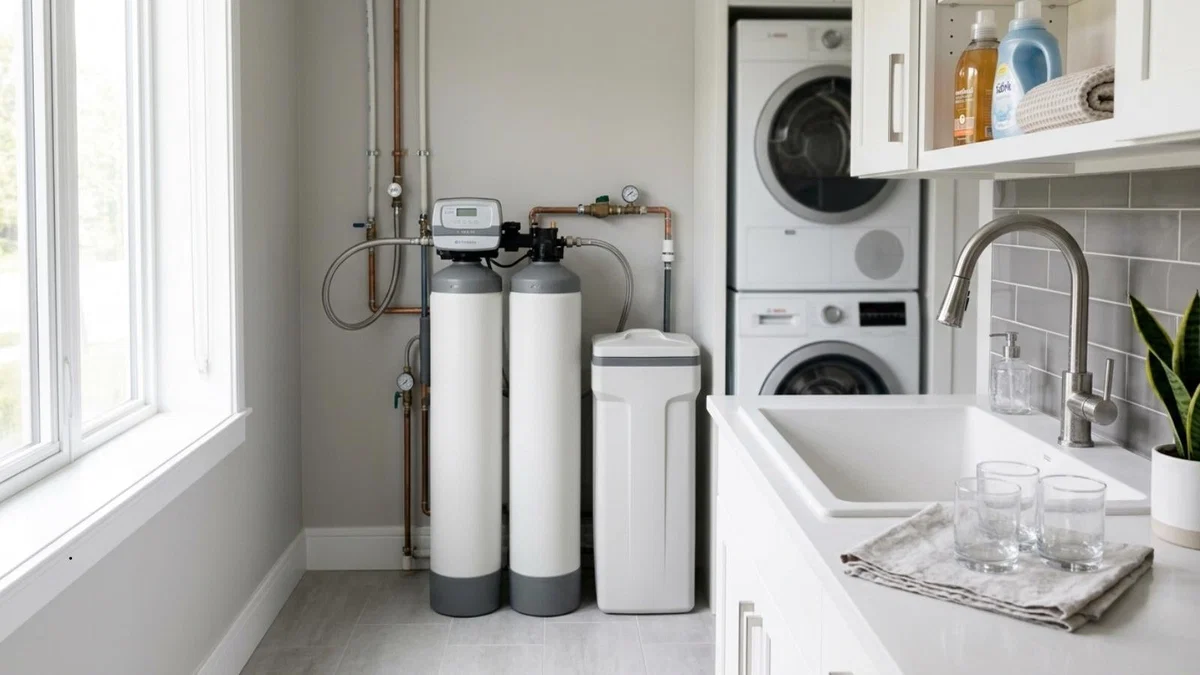
For many homes, water softeners are one of the most practical ways to manage hardness. Traditional ion-exchange softeners work by reducing calcium and magnesium through a process that replaces those hardness minerals with sodium or, in some systems, potassium ions.
The result is noticeably different water throughout the home.
Instead of treating only the kitchen tap, a properly sized softener can address water used for bathing, laundry, dishwashing, and other household activities. That broad coverage is one reason softening remains popular in areas where hard water is a persistent issue.
Still, choosing a softener isn’t simply a matter of buying the biggest unit available. Household water use, hardness level, family size, plumbing configuration, regeneration method, and available installation space all matter.
Related storyThe Hidden Water Problem That Slowly Wears Down a Home
A system that’s too small may regenerate frequently and struggle to keep up. One that’s oversized may cost more than necessary. Getting the sizing right is a boring detail, perhaps, but it’s the kind of boring detail that makes a system work better.
Softening Isn’t the Same as Filtration
One common misconception is that a water softener handles every possible water-quality concern. It doesn’t.
Softening is primarily designed to address hardness minerals. Filtration, on the other hand, can target specific substances such as sediment, chlorine, certain organic compounds, or other contaminants, depending on the filter technology used.
Related storyUnderstanding Problem Water Systems: Practical Water Treatment Solutions for Everyday Water Problems
That distinction matters.
If your water has a strange taste, noticeable odor, sediment, discoloration, or a specific contaminant concern, simply installing a softener may not solve the problem. In some homes, a combination of treatment technologies makes more sense.
For example, sediment filtration may be useful when well water contains visible particles. Activated carbon can help with chlorine and certain taste or odor issues. Other technologies, including reverse osmosis, may be appropriate for particular drinking-water concerns.
The right answer depends on what’s actually in the water—not what’s popular in an advertisement.
Looking Beyond the Kitchen Sink
Another approach worth considering is whole-home water treatment, especially when water-quality problems affect multiple areas of the property.
A whole-home setup treats water at a central point before it travels through the home’s plumbing. Depending on the equipment selected, this can include softening, sediment reduction, carbon filtration, or other specialized treatment.
There’s a practical advantage here: every connected fixture receives treated water. That means the shower, washing machine, dishwasher, bathroom faucets, and kitchen can all benefit rather than leaving homeowners to treat one tap at a time.
Of course, whole-home treatment isn’t automatically better for every situation. If the only concern is drinking water quality, a point-of-use system may be more economical. If hardness is the main problem, a properly sized softener might be enough.
Think of water treatment as a problem-solving exercise. Test first, identify the issue, then choose equipment that actually addresses it.
How to Reduce Scale and Protect Appliances
Treatment is only part of the equation. Regular maintenance still matters.
Clean faucet aerators and showerheads occasionally to remove mineral deposits before they become stubborn. Follow the manufacturer’s recommendations for maintaining water heaters, dishwashers, washing machines, and filtration equipment.
If you have a softener, keep an eye on salt levels if it’s a salt-based model. Don’t wait until the tank is completely empty. Periodic checks can also catch issues such as bridging, improper regeneration, or mechanical problems before water quality starts changing.
Appliances that use heated water deserve special attention because scale tends to become more problematic when water is heated repeatedly.
And if you’re noticing a sudden change in water quality, don’t automatically blame hard water. A new odor, discoloration, pressure change, or unusual taste can have other causes and deserves investigation.
Testing Comes Before Guesswork
Perhaps the most useful step is also the simplest: test the water.
A professional water analysis can measure hardness and identify other characteristics that may influence which treatment method makes sense. For private wells, testing can be especially important because water chemistry can vary over time.
Once you know the hardness level and any additional concerns, it becomes much easier to compare treatment options realistically.
There’s no prize for having the most complicated water-treatment setup. The goal is cleaner, more manageable water with equipment that fits the home’s needs and budget.
A Better Approach to Water Quality
Hard water is one of those household problems that’s easy to ignore—until the deposits become impossible to ignore. From cloudy glassware and stiff laundry to scale inside plumbing and water-heating equipment, the effects can add up.
The good news is that homeowners have options. A properly selected softener can address hardness, while filtration or other treatment technologies can handle concerns that softening alone doesn’t solve.
Start with a water test, understand what’s actually happening, and choose treatment based on evidence rather than guesswork. It may not be the most exciting home improvement project on your list, but once the water behaves the way it should, you’ll probably wonder why you waited so long.